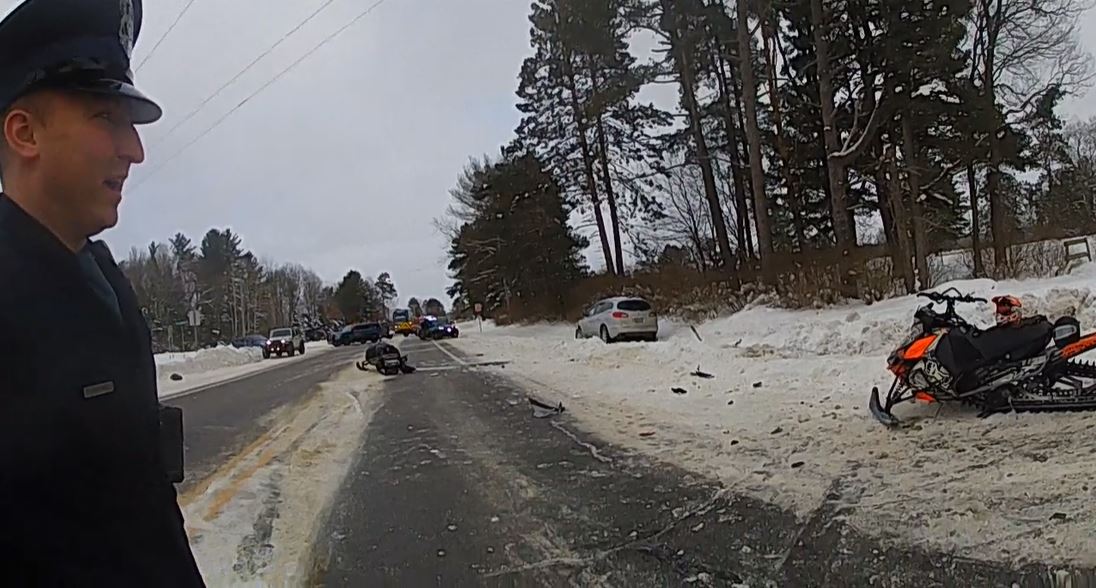
MICHIGAN — Munson Health Care officials reported a 150% increase in snowmobile-related accidents across its system from late December to late January. The health care provider issued a winter safety warning on Tuesday, Feb. 17, following an uptick in trauma cases involving snowmobiles and other cold-weather activities.
The spike in accidents is attributed to environmental factors such as high snowbanks, high speeds and decreased visibility from blowing snow. Several recent cases involved snowmobiles colliding with traveling vehicles. Dr. Shaun Ramsey, an emergency physician and EMS medical director, noted that high snow levels this season have led to an increase in visitors and riders in the Traverse City region.
More crashes occur at night when decreased visibility, high speed and alcohol consumption are often factors. Dr. Ramsey, an emergency physician and EMS medical director for the North Central and Northwest Regional Medical Control Authorities, said snowmobiles are powerful machines that require mutual awareness between riders and other motorists. “With the increased amount of snow this season bringing more visitors into the area, we want to encourage people to ride safely,” Ramsey said. “Snowmobiles are powerful machines and ensuring both snowmobile and vehicle drivers are looking out for one another is crucial.”
Safety officials suggest that snowmobile drivers wear bright clothing to improve their detection distance by up to 300%. Riders should also use helmets equipped with lights or consider after-market lighting to enhance visibility. Other recommendations include riding sober, following traffic laws and slowing down at all crossings.
High speed is the leading cause of serious injury and death in snowmobile accidents. If a snowmobile is traveling faster than 30 mph in low-visibility conditions, the driver cannot stop within their visible range. Ramsey emphasized that vehicle drivers also have a role in preventing collisions at intersections. “Vehicle drivers can also do their part by slowing down at snowmobile crossings, driving defensively and assuming that snowmobile drivers may not see vehicles,” Ramsey said.
Winter trauma concerns extend beyond snowmobiles to activities like sledding and tubing. Across the United States, more than 20,000 patients are treated annually in emergency rooms for sledding-related injuries. Children under age 19 account for 70% of those cases and more than 80% of those patients suffer head injuries.
Medical experts recommend helmets for any high-speed winter activity or those with a risk of falling, including skiing, snowboarding and ice skating. Studies indicate that wearing a helmet can prevent or reduce the severity of a traumatic brain injury by 62% to 88% depending on the specific activity.
The risk of falls also increases during winter months as paths become slippery. Officials recommend a technique called “Walk Like a Penguin” to navigate icy conditions safely. This method involves keeping hands free, bending knees slightly and taking slow, short, shuffling steps. Proper footwear with good grips is also recommended to maintain footing.
Munson Health care is encouraging citizens to be aware of ice safety as temperatures are expected to warm up this week. Additional safety resources are available through the Michigan Department of Natural Resources website.